From Classrooms to Communities: INSSPIRE’s Theory of Change in Action
Universities are emerging as powerful catalysts for climate-resilient food systems and the INSSPIRE project has shown how. Over three years in Kenya and Uganda, the project applied a Theory of Change approach to explore how higher education can transform learning, research, and community engagement to address real-world food system challenges.
INSSPIRE focused on three interconnected pathways:
- Intra-university transformation – reshaping curricula, pedagogy, and institutional practices.
- University–community engagement – turning communities into co-creators of knowledge.
- Inter-university collaboration – fostering cross-border learning and research partnerships.

Student-Level Transformation. Students gained practical and transdisciplinary skills through enriched courses and Real-Life Learning Labs (RLLLs). From food system and groundwater mapping to satellite data sourcing and analysis, these hands-on experiences bridged theory and practice. Participation in RLLLs and Collaborative Online International Learning (COIL) initiatives strengthened critical thinking, teamwork, leadership, and intercultural competence. Students also developed digital collaboration skills, self-direction, adaptability, and confidence, preparing a new generation capable of addressing complex climate and food system challenges both locally and globally.
Staff and Faculty Development.
Faculties benefited from training-of-trainers workshops, participatory pedagogy, and collaborative course design, which encouraged transdisciplinary, interdisciplinary and experiential teaching approaches. Engagement with RLLLs and COIL networks strengthened research skills, subject expertise, and cross-border collaboration, while also promoting co-authorship, peer learning, and sustained professional networks. Importantly, faculty translated these experiential insights into enriched curricula, helping to ensure that innovations in teaching contributed to broader institutional transformation.
Institutional and System-Level Transformation.
At the institutional level, INSSPIRE catalyzed cross-department collaboration, curricular flexibility, and alignment with labor market and societal needs. RLLLs were institutionalized in some universities and piloted in others, enabling practical engagement while maintaining policy compliance. Inter-university collaboration amplified these effects, creating Communities of Practice, joint research networks, and a culture of shared learning. These reforms embedded sustainability, climate resilience, and food system perspectives into university strategies, positioning institutions as climate-responsive, future-ready hubs.
Societal and Community Impact.
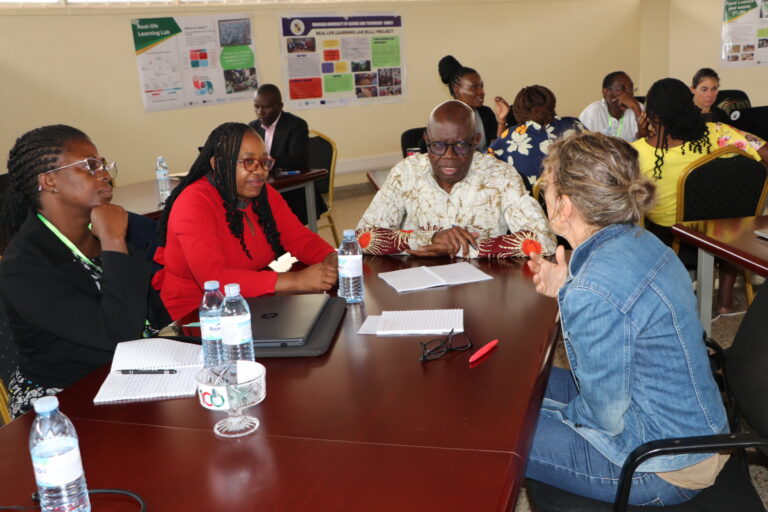
Communities were central to INSSPIRE’s approach: farmers, NGOs, and local stakeholders co-designed curricula, research questions, and learning outcomes, transforming universities into partners rather than solely service providers. RLLLs and collaborative projects worked towards evidence-based solutions, strengthened climate adaptation capacity, and fostered trust and mutual respect. South–South and Triangular Cooperation networks further extended these efforts, fostering cross-border knowledge sharing and broader partnerships. By integrating community input into teaching and research, universities increased social relevance and contributed to positive change[SD(3] s in local food systems.
Despite initial start-up challenges, implementation progressed steadily once systems were in place and INSSPIRE demonstrated that empowered staff, flexible institutions, early community involvement, and sustained partnerships are key to embedding practice-based, transdisciplinary learning. As the project concludes, its legacy is clear: by combining experiential learning, community co-creation, and international collaboration, universities can better prepare graduates for climate-resilient food system careers and contribute to sustainable societal transformation.